
Craft · October 2026 · 6 min read
How Clean Is Clean? — A Shoe Under the Microscope
To the naked eye, the shoe was already clean. At 800 times magnification, a lecturer in leather materials showed what clean really looks like.
I learned this craft the way Saphir teaches it. Clean, condition, polish — every step has its reason, and I have trusted those reasons through the hands and eyes of a craftsman.
But eyes have limits. I know a shoe is clean when I look at it. I had never seen how clean it actually was.
On the 12th of August, for the first time, I did.
The Man with the Microscope
Nguyen Hoang Sebastian is a leather conservator and a university lecturer in leather materials. He looks at leather not with the eye of a shoe lover, but with the eye of someone who studies the material itself.
He brought a microscope, and a simple question.
“Sometimes the eye says it’s clean. I still want to know how clean it really is.”
Nguyen Hoang Sebastian
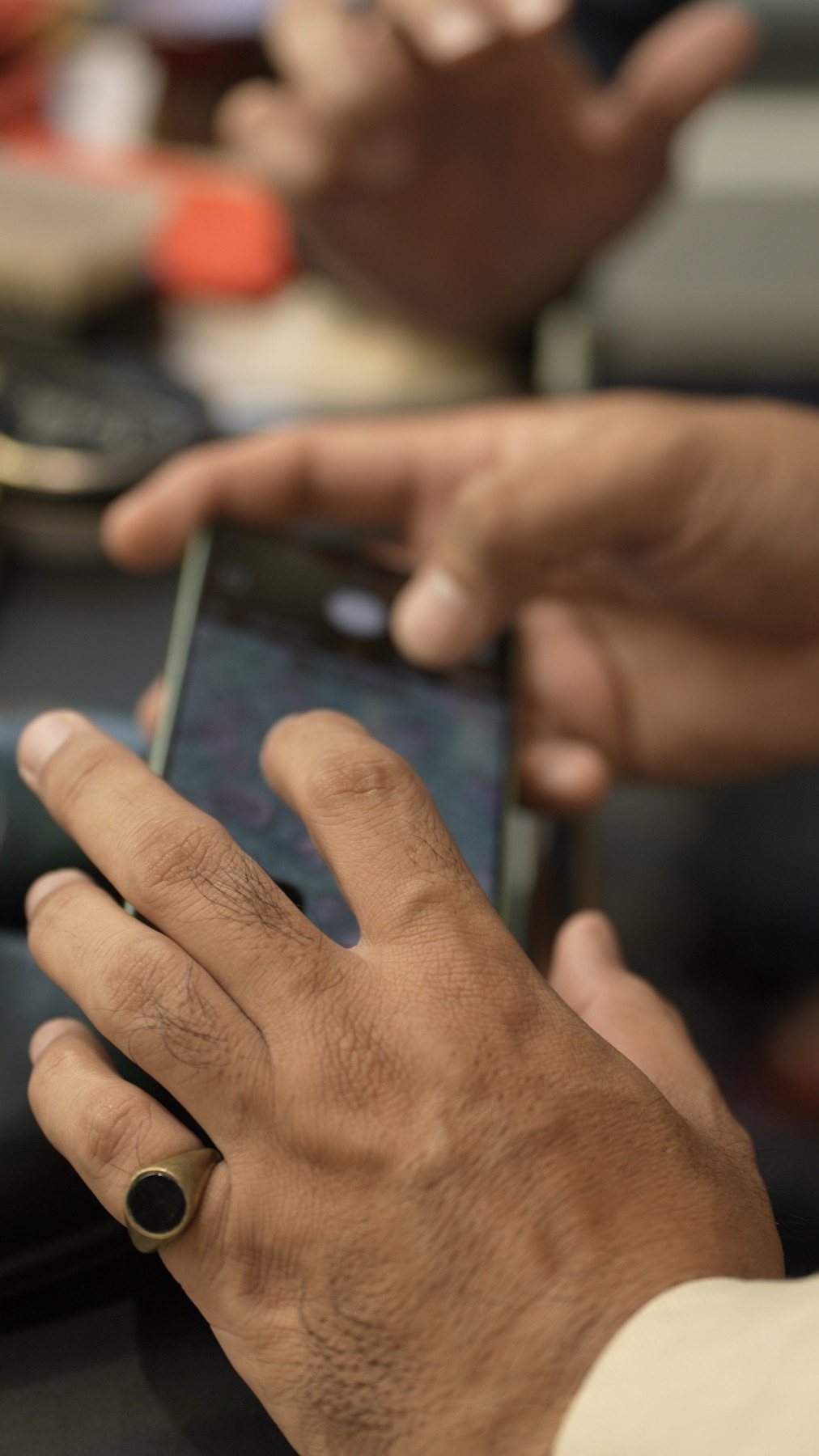
We agreed on a method. I would care for the shoe exactly as I do every day; he would photograph the same patch of leather after each step, at 200 to 800 times magnification.
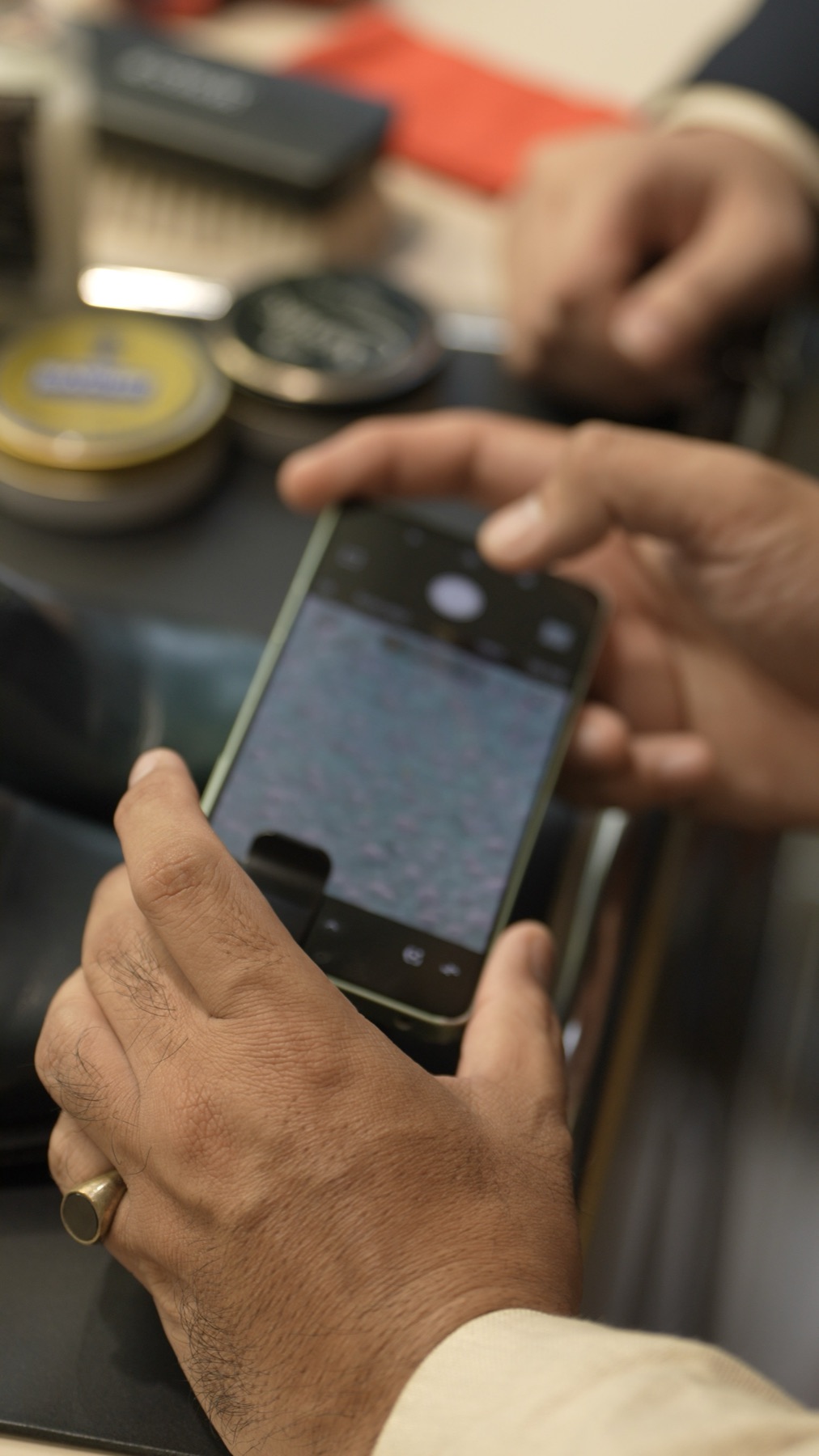
The Shoe
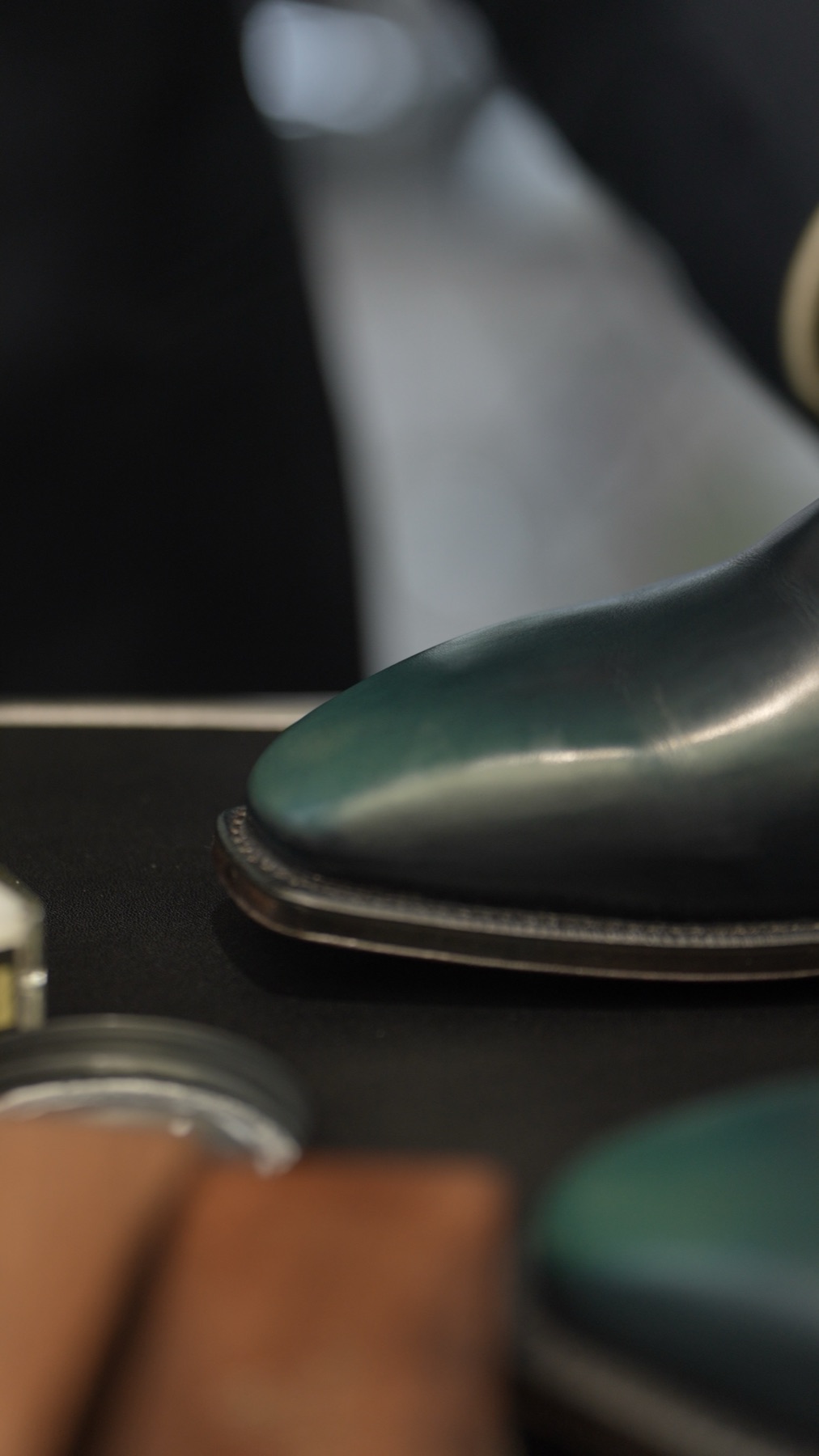
A Corthay Casanova in aniline calf, finished in a Midori patina — a deep green — and worn every day. Anyone who read about the Corthay trunk show at Marcher will remember: Corthay’s patina is applied by hand, one layer of colour at a time.
Aniline leather is dyed through the fibres rather than covered with a layer of paint. The surface stays open; you can still see the pores. Those pores are the subject of this story.
Step 0 — As Found
Under the lens, the leather is a field of pores. Many of them hold small dark spots.
According to Sebastian, those spots are oil, dirt, and residue from earlier layers of polish, wax and conditioner, built up over time. To the naked eye, none of it is visible. The shoe still looks fine.
Step 1 — Cleaning
What the craftsman does
I don’t use a brush to apply it. I work Saphir Médaille d’Or Cleanser into the leather directly with my fingers. Then I use a brush to lift away the dust and dirt.
What the microscope sees
Cleaning, Sebastian explains, is not washing. The product dissolves the dirt and the old polish; only then does the cloth carry them away. To clean most effectively, he says, takes three movements:
- Work up a lather so the solution can penetrate.
- Let the bristles of a brush push the solution deep into the pores.
- Wipe with a cloth, in one direction only.
And this is the moment that made him stop. The dark spots in the pores had almost disappeared. In their place was green.
He changed the angle of the light, the focus, the position on the shoe. The result held.
“That green is the dye of the aniline leather itself.”
Nguyen Hoang Sebastian
In other words, what had been covering the pores was gone — enough for the colour beneath to show through.

Step 2 — Conditioning
What the craftsman does
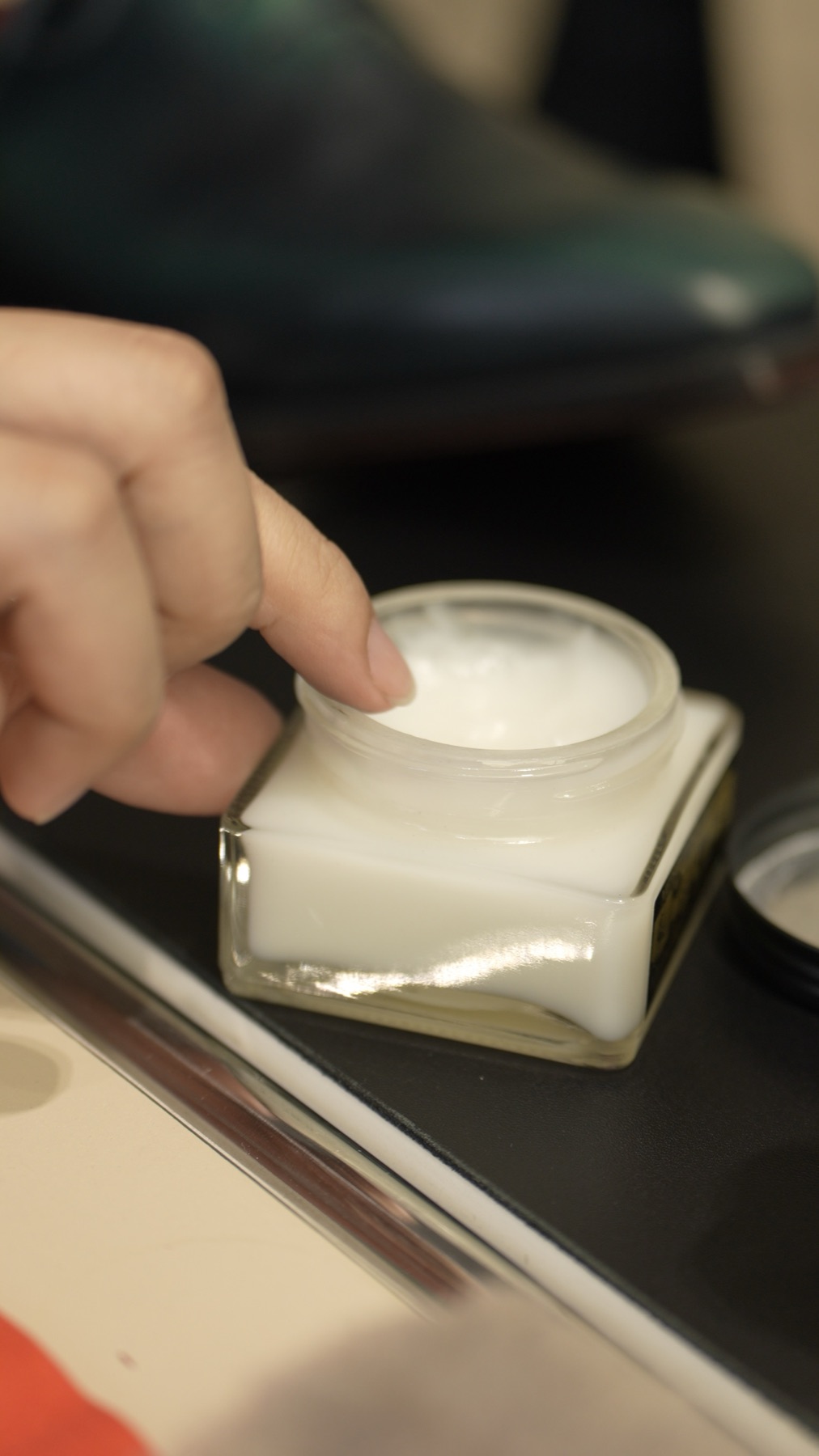
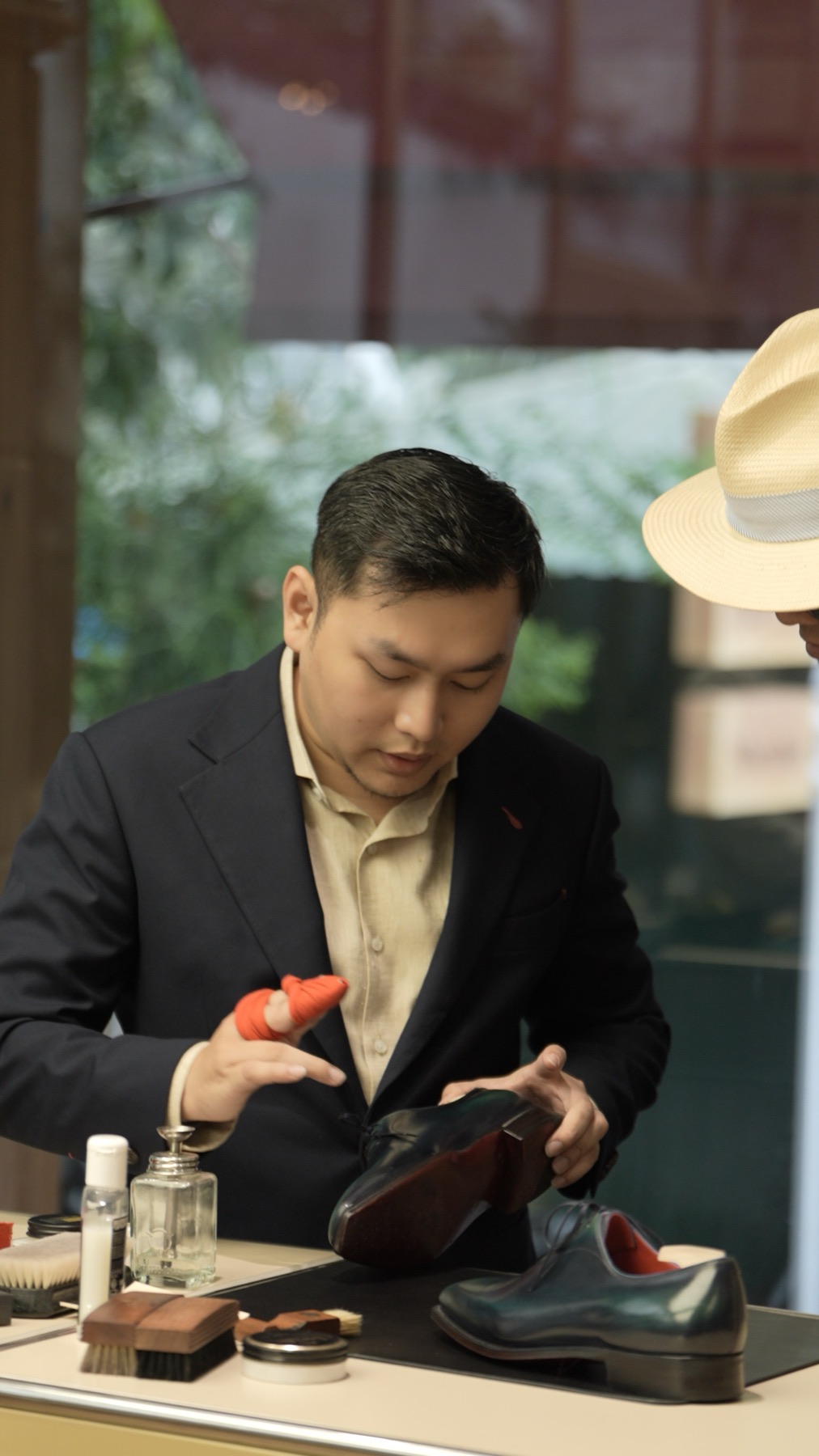
As with cleaning, I apply Saphir Médaille d’Or Crème 1925 directly with my fingers, never a brush. Fingers moving across the surface of the shoe create heat.
What the microscope sees
Conditioning, according to Sebastian, means taking nourishment into the leather — not leaving it on the surface. The way in is through the pores.
This is where craft and science meet. The warmth of the fingers opens the pores and the conditioner goes inside. Then you wait a moment for the pores to close again. Something I had always done by feel now had an explanation.
It is also why step one matters so much. A pore still full of old residue has no room for anything new.
Step 3 — The Wax
What the craftsman does
I lay down a base of Saphir Beauté du Cuir Mirror Gloss, preparing the leather for the mirror shine.
What the microscope sees
Unlike conditioning, the finish sits on the surface. For it to be beautiful, Sebastian says, the surface beneath must be smooth and clean — the skin has to be “rosy and healthy”.
A good shine doesn’t begin with the shine. It begins two steps earlier.
Step 4 — Finishing
What the craftsman does
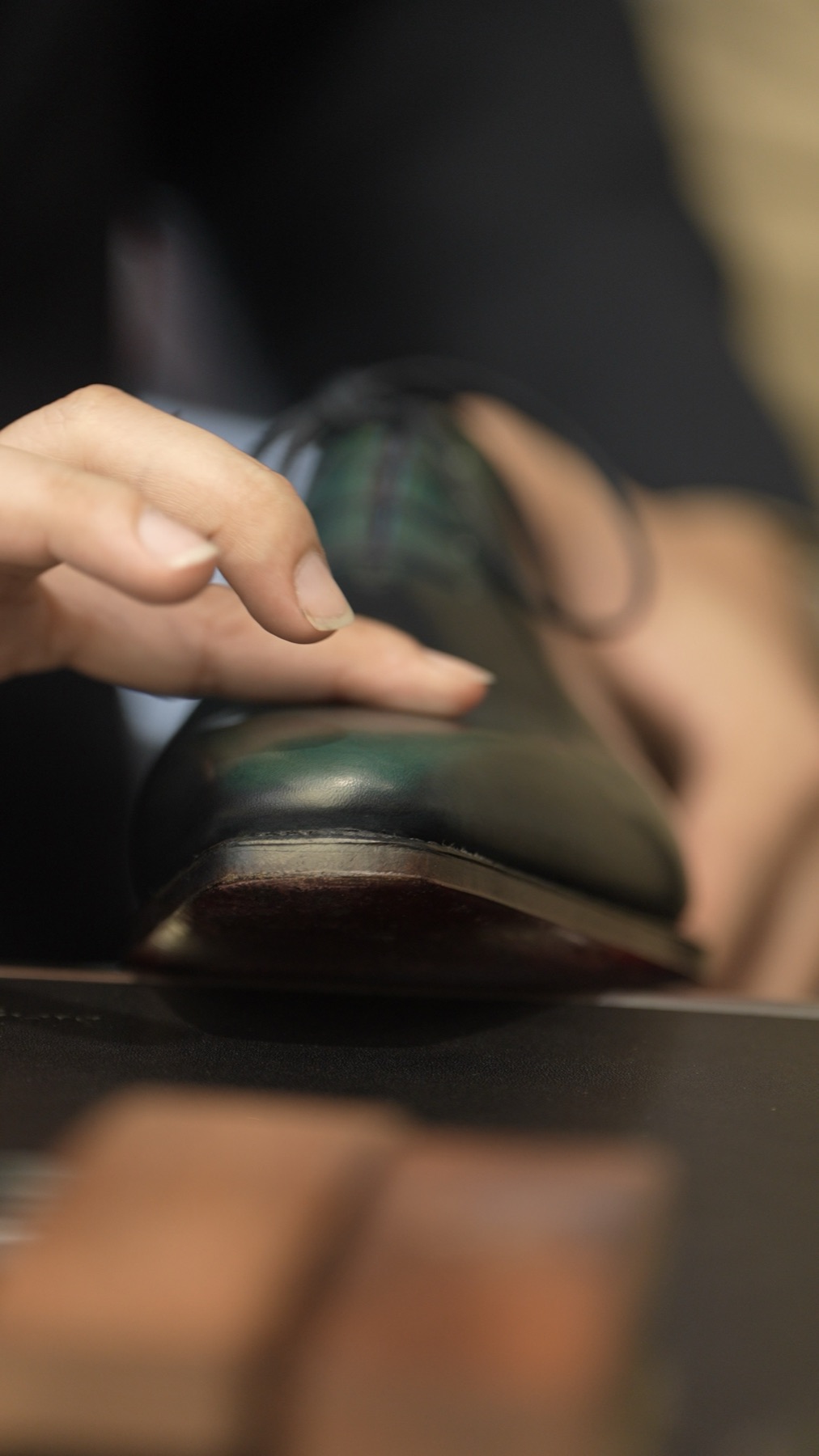
Finishing is polishing with wax, layer upon layer, until the toe shines like a mirror. This is the shine people wear to an evening event.
But a mirror shine is not meant to stay forever. After the event, the old polish needs to be stripped so the leather can be conditioned again. Left in place, the wax will seal the pores.
What the microscope sees
In the final images, silvery-white specks appear in the pores: dust and wax. The mirror shine has already begun to fill the very pores that were cleaned in step one — which is exactly why it has to come off after every occasion.
Makeup, and Taking It Off
Sebastian summed it all up with an image everyone understands: if you wear makeup to an event, you take it off when you get home — otherwise it damages the skin.
Polish and wax are a shoe’s makeup. They make it beautiful for an evening. But if new layers simply go on top of old ones, the residue slowly fills the pores — just like the dark spots in step zero.
When This Doesn’t Apply
Sebastian is careful to note two things:
- It applies only to dyed aniline leather. Inexpensive painted leather has a topcoat that seals the surface, and needs to be cared for differently.
- A single image at 200× or 800× cannot tell you everything about a hide. This is a way of checking, not a study.

What the Eye Can’t See
For years I have told clients that cleaning is the most important step. I said it because Saphir taught me so, and because my hands could feel the difference.
Now I have seen it.
“Let the pores speak for themselves.”
Nguyen Hoang Sebastian
Care at Marcher
When did your shoes last have their makeup taken off? Bring them to Marcher — Essential Care starts at 249,000₫.
hello@thisismarcher.com · +84 971 161 066